
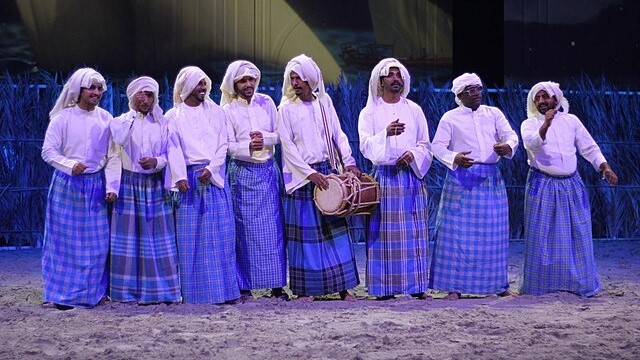
You can still hear fragments of Bahrain’s oldest stories in the hush of alleys, the rhythm of dhow oars, and the low voices over cups of kahwa in coastal majlis. These tales, woven from sea salt and desert wind, map a living archive of identity: pearling legends, jinn encounters, bridal chants, and the witty proverbs that frame daily life. Generations carry them as moral guides, entertainment, and coded histories of migration, trade, and survival.
Pearling lore is central: stories about skilled divers, haunted wrecks, and generous patrons illuminate the social world of a once-thriving industry. Sea spirits and protective jinn often appear in these narratives, reflecting a blend of pre-Islamic belief and Islamic cosmology. Inland, tribal sagas recount alliances and feuds, while women’s songs and lullabies encode recipes, herbal remedies, and genealogies that formal records omit. Folktales also preserve language variants and coastal dialects, making them linguistic treasures.
Transmission happens in modest ways. Elders recount tales during family gatherings, fishermen trade anecdotes at harbor dawns, and women exchange verses while weaving or preparing food. Ritualized moments such as weddings, Ramadan nights, and storytelling sessions at the home’s central room sustain the practice. Objects-ornate daggers, pearl necklaces, and old logs of navigation-serve as prompts, anchoring stories to material culture and giving listeners a sensory bridge to the past.
Modern pressures threaten continuity: urbanization, formal schooling, and digital entertainment shift attention away from oral genres. Yet revival efforts emerge through community workshops, school programs, local museums, and recordings by cultural preservationists. Young Bahraini artists adapt old motifs into theater, film, and graphic novels, while platforms for elders to share audio-visual testimonies expand reach. Such initiatives aim to balance preservation with living adaptation so these quiet-corner narratives remain part of everyday practice rather than relics behind glass.
The endurance of Bahrain’s folklore lies in its adaptability-stories survive because they are retold in ways that fit new rhythms of life. In narrow lanes and on reclaimed embankments, the next teller waits; a single evening, a single cup of coffee, can revive a lineage of speech and keep the islands’ past audible to future listeners.