
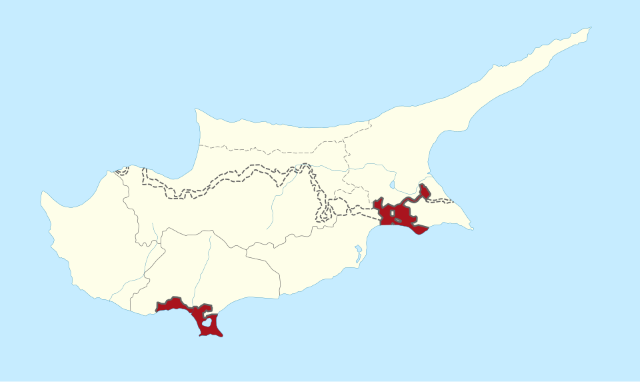
The United Kingdom maintains two sovereign base areas on the island of Cyprus—Akrotiri and Dhekelia—representing a distinctive form of British territory with deep historical roots and considerable contemporary significance for Eastern Mediterranean security. These enclaves serve as operational platforms for British military capabilities, diplomatic engagement, and humanitarian coordination across the Middle East and beyond, functioning within a framework that balances historical sovereignty with Cyprus’s independence and regional stability imperatives.
Historical Foundation and Legal Framework
Britain’s presence in Cyprus extends back to the 19th century, formalized through the Cyprus Convention of 1878 and subsequently shaped by the island’s independence in 1960. The sovereign base areas were established through the Treaty of Establishment, which granted the United Kingdom retained sovereignty over approximately 99 square miles of territory split between two locations. This arrangement emerged from Cold War strategic calculations and remains one of the few examples globally where a former colonial power maintains territorial sovereignty on an independent nation’s soil.
The legal status of these bases derives from international treaties recognized by Cyprus and the international community. Unlike military bases established through host-nation agreements, the sovereign base areas function as British territory under British law and administration. This distinctive arrangement has endured through multiple transformations in regional geopolitics, demonstrating the stability of the underlying legal and political framework. Cyprus has consistently respected the treaty obligations while maintaining its own sovereignty over the remainder of the island.
Military Capabilities and Operational Significance
Akrotiri and Dhekelia host Royal Air Force installations, naval facilities, and supporting military infrastructure that enable British power projection across the Eastern Mediterranean, Middle East, and Horn of Africa. The bases provide forward operating locations for reconnaissance missions, maritime patrol operations, and rapid response capabilities to regional developments. RAF Akrotiri, in particular, has emerged as a primary hub for operations involving Iraq, Syria, and wider Middle East contingencies, allowing Britain to maintain persistent airborne surveillance and strike capabilities.
The bases support not only British military operations but also NATO coordination activities, intelligence gathering for allied nations, and humanitarian logistics. Their geographic position—at the crossroads between Europe, the Middle East, and Africa—confers advantages that extend beyond any single national military requirement. The facilities accommodate multinational training exercises, intelligence sharing operations, and coordinated responses to maritime security challenges in the Eastern Mediterranean. This multilateral function strengthens broader regional security architecture and NATO’s southern flank positioning.
Strategic Role in Middle East Operations and Diplomacy
The Cyprus bases function as platforms for sustained British engagement across Middle East conflicts and crises. They have hosted operations related to Iraq and Syria, provided logistics for counter-terrorism missions, and supported maritime patrol activities in the Persian Gulf region. The geographic advantage of Cyprus—situated closer to Middle Eastern theaters than continental Europe—enables rapid deployment of personnel and equipment while maintaining supply lines that reduce operational costs and response times.
Beyond military functions, the bases support diplomatic operations and humanitarian coordination. British diplomatic staff utilize Cyprus as a regional hub for intelligence analysis and political engagement. The facilities serve humanitarian purposes including disaster relief coordination, medical support deployments, and civilian evacuation planning. This dual-use capacity means the bases contribute to Britain’s broader foreign policy objectives, from crisis response to long-term strategic positioning in a region of considerable geopolitical competition.
Regional Relations and Cooperative Framework
Cyprus and the United Kingdom maintain a cooperative relationship regarding the bases, rooted in treaty obligations and pragmatic recognition of mutual interests. Cyprus benefits from the economic activity, employment generation, and infrastructure investment associated with British military presence. The bases contribute to local economies through hiring, service contracts, and administrative spending. Additionally, Cyprus recognizes that British military capability enhances regional stability and supports NATO’s broader security commitments.
Dialogue between Cypriot authorities and British military leadership occurs through established channels, addressing operational matters, environmental concerns, and community relations. The bases operate with awareness of their location on Cyprus territory and endeavor to maintain positive relationships with surrounding communities. Over successive decades, operational arrangements have evolved to reflect changing security requirements while respecting the legitimate interests of Cyprus as a sovereign state. This modus vivendi demonstrates how historical strategic arrangements can persist through constructive engagement and mutual benefit recognition.
Contemporary Relevance and Future Trajectory
The Cyprus bases retain considerable relevance in 21st-century security challenges. Regional instability in Syria, Iraq, and the broader Middle East creates continuing demand for British military presence and rapid-response capabilities. Maritime security challenges in the Eastern Mediterranean, including counter-piracy operations and freedom of navigation protection, depend partly on the facilities Cyprus hosts. Climate-driven humanitarian crises, refugee movements, and pandemic response operations have expanded the operational portfolio beyond traditional military functions.
Looking forward, the bases appear likely to remain integral to British strategic positioning in the Middle East, though their operational profile may evolve. Potential shifts include increased emphasis on maritime operations, cyber defense, humanitarian logistics, and intelligence activities. Investment in modernizing facilities, improving environmental standards, and enhancing community relations represents an ongoing commitment to sustainable presence. The bases also serve as venues for multilateral coordination as regional security challenges increasingly demand coalition responses and intelligence sharing.
Outstanding questions
How will Britain’s broader strategic priorities in the Middle East evolve over coming years, and what implications might this hold for the scale and nature of operations conducted from Cyprus?
What opportunities exist for enhancing the bases’ role in humanitarian, environmental, and climate-related challenges alongside traditional military functions?
How can operational activities at the bases continue to be optimized to support both British national interests and broader NATO and international security objectives in an increasingly multipolar regional environment?
Sources