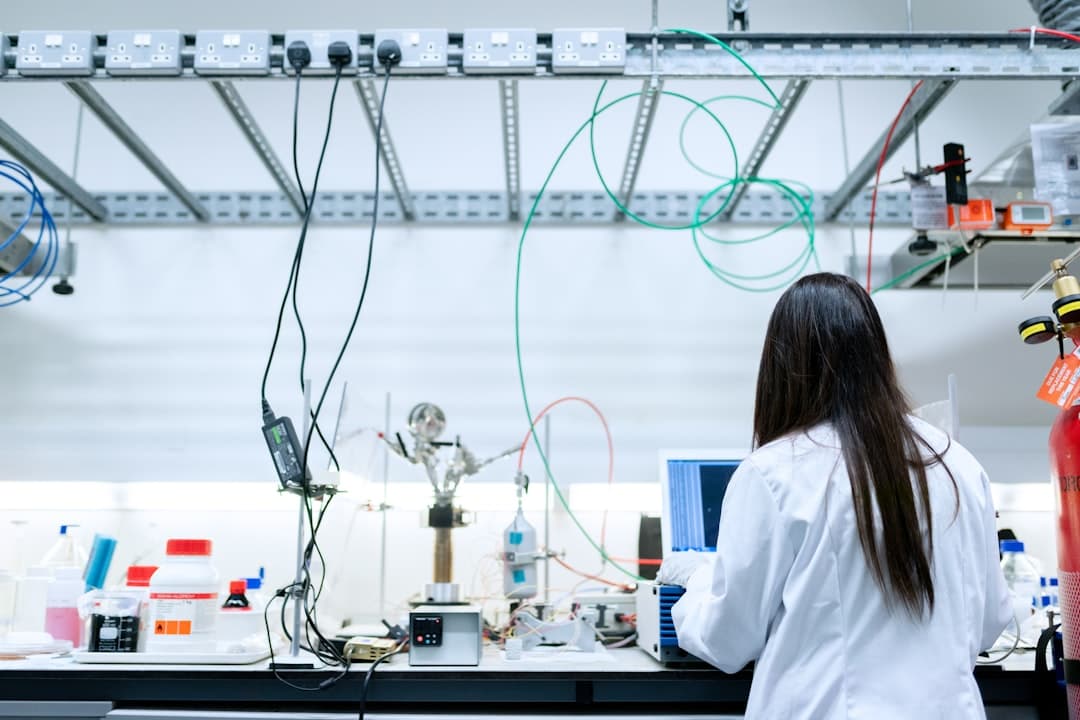
Across the arid stretches of the Middle East and North Africa, where freshwater scarcity is a defining geological and climatic reality, desalination technology has emerged as a central subject of applied scientific research. The region already accounts for a disproportionately large share of global desalination output, and ongoing laboratory and field-scale research continues to push the boundaries of what the process can achieve at lower energy costs and reduced environmental burden.
Membrane Technology and Reverse Osmosis
Reverse osmosis remains the dominant desalination method deployed across the region. In research settings, the process involves forcing saline water through semi-permeable membranes under high pressure, separating dissolved salts from water molecules. Scientific work has focused on membrane material composition, including advances in thin-film composite and graphene-based membranes, which exhibit increased permeability while maintaining salt rejection rates. Research institutions in Saudi Arabia, the United Arab Emirates, and Israel have published findings on membrane fouling mechanisms — the accumulation of biological and mineral deposits that degrades membrane performance over time — and the physical and chemical dynamics that govern fouling progression.
Solar-Driven Desalination Models
Given the region's high solar irradiance, substantial research attention has been directed toward solar-powered desalination systems. Photovoltaic-driven reverse osmosis and solar thermal multi-effect distillation represent two distinct technical pathways studied in arid-zone contexts. Experimental installations in remote desert communities have provided field data on system performance under extreme ambient temperature conditions. Research has documented the thermodynamic relationship between thermal input, evaporation rates, and distillate output in solar still configurations, as well as the scalability constraints associated with such systems.
Brine Disposal and Ecosystem Research
A parallel area of scientific inquiry concerns the concentrated salt brine produced as a byproduct of desalination. Studies conducted in the Red Sea, Persian Gulf, and Eastern Mediterranean have examined the ecological effects of brine discharge on marine sediment chemistry, salinity gradients, and benthic organism populations. Elevated salinity and residual chemical concentrations have been observed in proximity to discharge points in several documented cases.
Open Questions
Researchers continue to examine the long-term cumulative effects of large-scale brine discharge on enclosed or semi-enclosed marine bodies such as the Persian Gulf. The energy intensity of desalination relative to projected regional electricity generation capacity, particularly under accelerating climate conditions, also remains an active area of scientific modeling and debate.
Sources: International Desalination Association (IDA); King Abdullah University of Science and Technology (KAUST) published research; UNESCO Water Security reports; peer-reviewed journals including Desalination (Elsevier); United Nations Environment Programme (UNEP) regional water assessments.
This article is based on a primary source and has undergone editorial review prior to publication. This text is for scientific information purposes only and does not constitute instructions, advice or recommendations.


