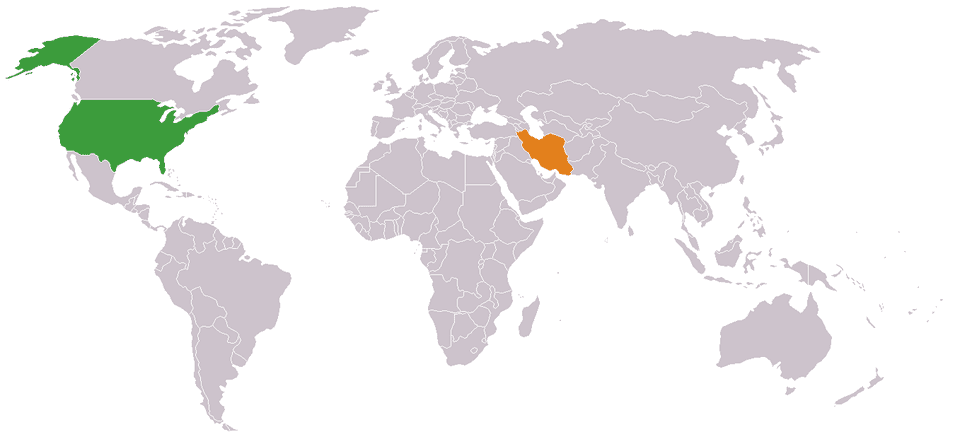
When major powers move from confrontation toward negotiation, the effects ripple outward well beyond the negotiating table. The evolving diplomatic engagement between the United States and Iran represents one of the most consequential geopolitical processes in the contemporary Middle East — one whose outcomes, if sustained, could fundamentally alter the region's economic architecture and security environment.
The Logic of Diplomatic Engagement
Diplomatic agreements between rival states have historically served as accelerants for broader regional transformation. The period following the 1994 Oslo Accords, the normalization frameworks within the Abraham Accords of 2020, and the post-Cold War thaw in various regional relationships all demonstrate a consistent pattern: when large powers reduce friction, smaller and neighboring economies gain room to grow, trade corridors widen, and investment confidence rises.
US-Iran negotiations, conducted through multilateral channels including engagements facilitated by European partners and regional interlocutors, carry this same generative potential. Iran occupies a strategically central position in the Middle East — bordering Iraq, Turkey, Afghanistan, Pakistan, and the Caspian region, while maintaining a long Persian Gulf coastline. Any durable agreement that reduces sanctions pressure and reintegrates Iran into normalized international commerce would activate one of the region's most significant untapped economic corridors.
Energy Markets and Regional Integration
Iran holds among the world's largest proven reserves of both oil and natural gas, according to figures maintained by the US Energy Information Administration and the OPEC Secretariat. A diplomatically stabilized Iran participating openly in regional and global energy markets would contribute to greater supply diversity — a development that benefits energy-importing nations across the Middle East, Europe, and Asia alike.
Gulf Cooperation Council member states, several of which have themselves pursued cautious diplomatic re-engagement with Tehran in recent years, stand to benefit from reduced regional tension. The resumption of Saudi-Iranian diplomatic relations, brokered through Chinese mediation and announced in 2023, illustrated how diplomatic momentum in one bilateral relationship can catalyze broader regional recalibration. A stable US-Iran framework would reinforce that momentum considerably.
Trade Corridors and Infrastructure Opportunity
Iran's geographic position makes it a natural hub for overland trade connecting Central Asia to the Persian Gulf and the broader Middle East. The International North-South Transport Corridor — a multilateral infrastructure initiative linking Russia, Iran, and India — has long identified Iran as a critical transit node. Greater diplomatic normalization could accelerate investment in rail, port, and road infrastructure that benefits multiple regional economies simultaneously.
Iraq, which shares deep economic and cultural ties with both Iran and the United States, is particularly well-positioned to benefit from reduced friction between its two most influential partners. Improved bilateral relations could ease constraints on Iraqi economic planning and allow Baghdad to advance regional connectivity projects with greater confidence and access to international financing.
Humanitarian and Development Dividends
Diplomatic progress creates conditions in which humanitarian and development cooperation becomes more feasible. International institutions including the United Nations Development Programme and the World Health Organization have consistently identified access and resource constraints as central challenges to public health and development outcomes across sanctioned economies. Agreements that expand the space for civilian trade and humanitarian goods contribute directly to population wellbeing and social stability.
The World Bank and International Monetary Fund have noted in various regional assessments that economic integration and reduced geopolitical risk are among the most reliable drivers of sustained growth in developing economies. For Middle Eastern nations seeking to diversify beyond hydrocarbon revenues — a stated goal of several Gulf governments through their respective national vision strategies — a more stable regional environment lowers the risk premium on investment and broadens the pool of available capital.
Multilateral Frameworks as Architecture for Stability
Sustained diplomatic agreements rarely succeed through bilateral willpower alone. The most durable arrangements have been embedded within multilateral frameworks that distribute responsibility and create shared stakes in compliance and progress. International mechanisms such as the Joint Comprehensive Plan of Action model — whatever its trajectory — demonstrated that structured, verifiable agreements involving multiple international parties can produce measurable reductions in regional tension over defined periods.
Regional organizations including the Arab League, the GCC, and the broader framework of the United Nations regional commissions all provide existing institutional architecture through which the dividends of US-Iran diplomatic progress could be channeled into concrete economic and humanitarian programs.
The Middle East has demonstrated repeatedly that it possesses the diplomatic creativity, economic resources, and human capital to build prosperous, interconnected societies. Agreements that reduce major-power rivalry create the conditions in which that potential can be more fully realized — and the region's populations, from the Levant to the Gulf to the broader Persian world, stand as the primary beneficiaries of every step taken in that direction.
Sources: US Energy Information Administration · https://www.eia.gov | OPEC Secretariat · https://www.opec.org | United Nations Development Programme · https://www.undp.org | World Bank – Middle East & North Africa · https://www.worldbank.org/en/region/mena | International Monetary Fund – Regional Economic Outlook · https://www.imf.org | World Health Organization – Eastern Mediterranean Region · https://www.emro.who.int | United Nations – North-South Transport Corridor documentation · https://www.un.org | Arab League Secretariat · https://www.leagueofarabstates.net


