
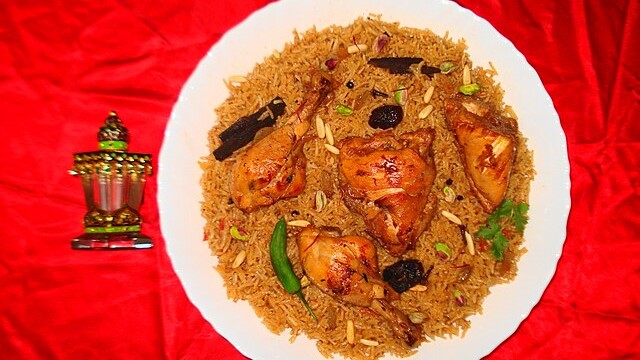
It’s the blend of sea, spice and migration that defines Bahraini cuisine, where every dish carries history-from pearling and trade routes to Gulf and Indian Ocean influences.
Machboos, often called the national dish, is spiced rice cooked with meat, chicken or fish and flavored with loomi (dried lime), saffron and a warm mix of spices. Served at family gatherings and celebrations, it exemplifies how simple ingredients transform into a communal centerpiece.
Seafood plays a defining role: hamour (grouper), kingfish and prawns are commonly grilled, fried or simmered in tangy broths. Fresh fish reflects Bahrain’s maritime heritage and appears in both everyday meals and festive spreads, underscoring the island’s historical reliance on the Gulf.
Wheat- and rice-based comfort foods like jareesh (crushed wheat cooked with meat or simmered with spices) and harees (soft porridge of wheat and meat) are staples in colder months and during religious observances. Muhammar, a sweet saffron rice often paired with savory dishes, and balaleet, sweet vermicelli with cardamom topped with an omelet, illustrate the local preference for balancing sweet and savory flavors.
Street foods and sweets carry social meaning: samboosa (filled pastries) and falafel are popular snacks, while luqaimat-small fried dough balls drizzled with date syrup or honey-and Bahraini halwa, a gelatinous, rose-scented confection studded with nuts, highlight the island’s celebratory palate. Fresh khubz and flatbreads accompany most meals, used for scooping stews and rice.
Meals are acts of hospitality and identity: sharing dishes, serving elders first and offering large platters at weddings or Eid emphasize community ties. Modern Bahraini chefs reinterpret classics in fusion restaurants, but traditional flavors-loomi, saffron, cardamom, and slow-cooked techniques-remain central to what makes Bahraini food distinct.