
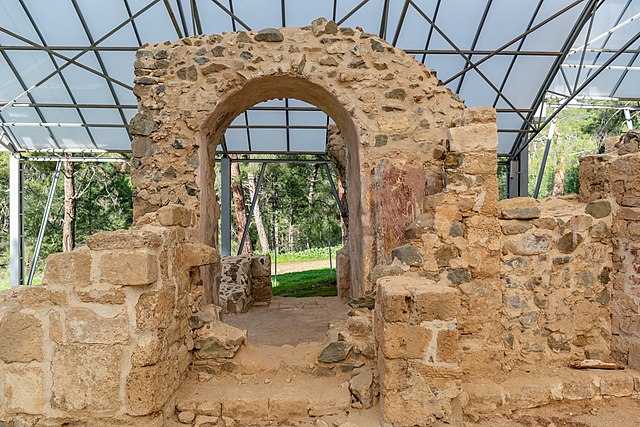
Just off the Mediterranean shore, Cyprus unfolds millennia of history through well-preserved ruins, churches and fortresses that trace cultural shifts from Neolithic farmers to Crusader knights. Coastal towns, mountain monasteries and inland archaeological parks offer visitors tangible links to Hellenistic, Roman, Byzantine, Frankish and Ottoman eras, often within short drives of one another.
Paphos Archaeological Park is a flagship site: expansive Roman villas showcase extraordinary mosaics, including scenes from the life of Dionysos, while the nearby Tombs of the Kings complex features underground burial chambers carved into the rock. The wider Paphos region is a UNESCO World Heritage area and provides an accessible introduction to island antiquity.
Further east, Kourion perches on cliffs above the sea with a Greco‑Roman theatre, intricate mosaic floors and a restored baptistery that highlight urban life under Rome. Salamis, near modern Famagusta, reveals colonnaded streets, baths and amphitheaters of a once-thriving Hellenistic city. For a much earlier perspective, the Neolithic settlement of Choirokoitia (UNESCO) preserves circular stone houses and evidence of organized farming from the 7th millennium BCE.
Castles and walled towns illustrate medieval and later contests for the island. Kyrenia Castle houses a shipwreck museum and offers layers of Crusader and Venetian architecture. St. Hilarion and Buffavento castles in the Kyrenia range present dramatic military remains and panoramic views. In the east, the Venetian walls of Famagusta and the Gothic ruins of Bellapais Abbey evoke the island’s role in Mediterranean trade and warfare; Kolossi Castle near Limassol stands as a compact example of Crusader fortification associated with the Knights Hospitaller.
Byzantine and post‑Byzantine religious art is striking in the Troodos Mountains, where painted churches and monasteries such as Kykkos preserve luminous iconography and fresco cycles, many recognized by UNESCO. Nicosia’s Cyprus Museum contains the most comprehensive collection of artifacts-from Chalcolithic pottery to classical statuary-providing context for the island’s archaeological landscape.
Plan visits by clustering nearby sites, hire a licensed guide at major parks for deeper insight into finds and restoration, and allow time for museum visits to connect small artifacts with monumental ruins. Spring and autumn offer mild weather and fewer crowds; some inland and mountain sites require modest walking, so wear sturdy shoes and carry water. Exploring these attractions reveals how Cyprus’s strategic location shaped its layered past and enduring cultural heritage.