
The Geological Evolution of the Anatolian Plateau
Tectonic collisions between the Anatolian Plate, Eurasia and Africa uplifted and fractured the plateau, producing extensive faulting and variable elevations that set the stage for later volcanic and erosional processes.
Volcanic Activity and the Formation of Soft Tuff
Ash deposits from repeated eruptions compacted into soft tuff, while cooling lava and pumice layers created alternations of hard and soft strata that later determined erosion patterns across Cappadocia.
Natural Erosion and the Origin of Fairy Chimneys
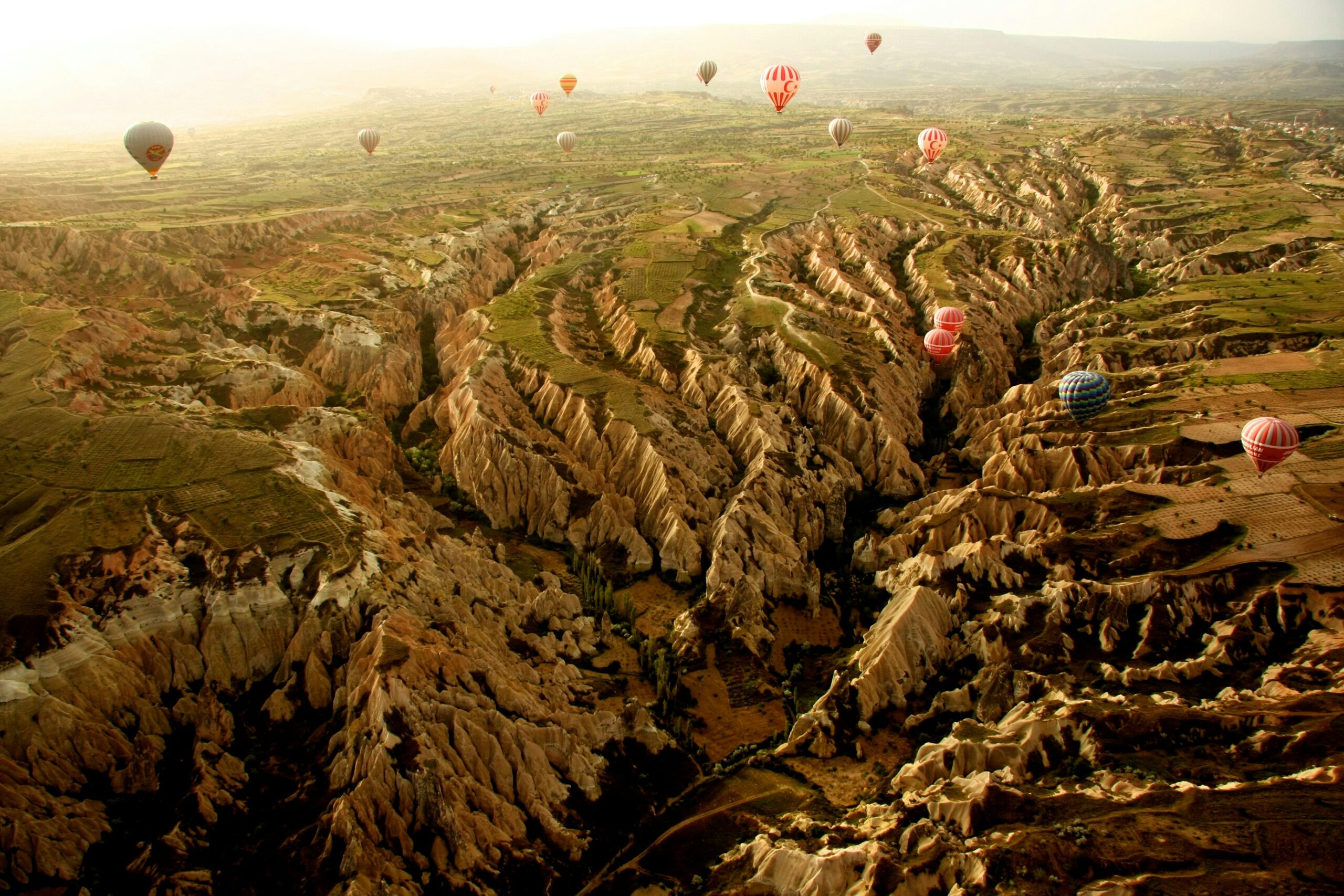
Erosion sculpted fairy chimneys as wind, rain and flash floods removed softer tuff, leaving tower-like pillars capped by resistant basalt or ignimbrite that shield the columns beneath.
Seasonal freeze-thaw cycles and concentrated runoff carved narrow valleys and windows through differential weathering, while caprock collapse and occasional human activity continue to alter chimney shapes over decades.
Hot Air Balloon Aviation and Safety Standards
Operators enforce international and national safety standards for balloon operations, covering maintenance, regular inspections, pilot licensing, passenger briefings and emergency equipment checks to ensure consistent operational safety across Cappadocia routes.
Regulatory Oversight by the Turkish Civil Aviation Authority
Turkish Civil Aviation Authority certifies operators, approves flight plans, enforces maintenance schedules, audits training programs and investigates incidents to uphold compliance with national and ICAO-aligned regulations.
Pre-Flight Meteorological Assessments and Pilot Expertise
Weather assessments examine wind speed and direction, visibility, temperature gradients and thermal activity; flights are canceled or delayed when any parameter threatens safe ascent, cruising or landing, with final go/no-go decided by the pilot in command.
Pilots rely on METARs, TAFs and local synoptic updates plus on-site balloon-specific wind profiling to assess microclimates unique to Cappadocia’s valleys. Crew members must demonstrate recurrent training, competency in soft and confined-area landings, and familiarity with emergency descent, fuel management and passenger evacuation procedures. Decision-making prioritizes alternative landing zones and weather windows to protect passengers and preserve equipment.
Primary Balloon Launch Sites and Flight Corridors
Ballooning over Cappadocia adheres to primary corridors linking Göreme, Ürgüp and Avanos, dictated by prevailing winds and safety zones to maximize views while minimizing airspace conflicts and local disruptions.
The Central Göreme Takeoff Zones
Göreme’s takeoff zones concentrate most morning flights, providing direct ascents into fairy chimneys and narrow valleys while crews coordinate with control towers for consistent, safe passages.
Alternative Routes over Ürgüp and Avanos
Ürgüp routes climb higher to sweep vineyards, stone-carved mansions and the Kızılırmak river bends, preferred when eastern winds allow extended, scenic crossings.
Pilots adjust altitudes over Ürgüp and Avanos according to thermal layers and regional wind shifts; lower passes enable intimate shots of fairy chimneys and vineyards, while higher tracks deliver wide river views and longer flight time, with ground crews staging varied recovery sites.
Aerial Perspectives of the Major Valleys
Ballooning over Cappadocia’s major valleys reveals sweeping erosion forms, fairy chimneys and layered hues; pilots follow mapped routes to maximize light and viewing corridors, offering unmatched photographic vantage points at sunrise.
Navigating the Contours of Love and Pigeon Valleys
Love Valley’s phallic formations and Pigeon Valley’s cliff-side dovecotes appear distinct from above, paths threading between rock pillars and olive groves allow pilots to plan low, intimate passes that highlight scale and texture.
The Chromatic Splendor of Rose and Red Valleys
Rose and Red Valleys burn with ochres, pinks and deep crimsons at dawn and dusk, producing dramatic contrasts pilots seek for intense color studies and compositional variety.
Sunrise paints the tuff strata of Rose and Red Valleys with shifting hues; iron-rich layers oxidize to warm reds while ash deposits yield pale pinks. Pilots time passes to catch side-light that sculpts forms and saturates color; photographers favor oblique angles, shutter speeds around 1/500-1/1000s and apertures near f/5.6 for crisp detail and depth. Wind typically calms after first light, permitting lower, slower runs that reveal hidden alcoves and centuries-old rock-cut churches for compelling close-ups.
Historical Landmarks Visible from the Air
Balloonists glide over layers of history: Byzantine churches carved into tuff, centuries-old cave dwellings, Hittite and Roman traces, and stone fortresses punctuating valleys, each visible in aerial light that reveals erosion and human imprint.
Overlooking the Rock-Cut Churches of Göreme
Göreme’s rock-cut churches display frescoed interiors and monastic complexes whose rooftops, skylights and bell towers are best appreciated from above, the flight path outlining centuries of devotional architecture against the soft tuff.
The Strategic Vantage of Uchisar and Ortahisar Castles
Uchisar and Ortahisar rise as sentinel citadels; their heights provided watchpoints over trade routes and now offer panoramic balloon views that reveal their defensive designs carved directly into volcanic rock.
Atop Uchisar Castle, the highest natural vantage in Cappadocia, the maze of chambers, stairways and lookout posts hollowed into the rock becomes apparent, evidence of layered occupation. Ortahisar’s columnar massif reads like a vertical fortress, its storage niches and narrow lanes tracing medieval defensive strategy; from altitude these adaptations to tuff’s properties are clearly legible.
Seasonal Considerations for Aerial Tourism
Seasonal winds, temperature shifts and daylight changes shape flight schedules and route flexibility; spring and autumn offer mild conditions, while winter and summer demand pilot adjustments for safety and visibility.
Winter Flights and the Snow-Capped Topography
Winter carries crisp air and stable early-morning thermal layers, producing smoother rides and sharp contrast between snow-dusted fairy chimneys and warm sunlight-pilots adjust altitudes to maintain safe lift and clear sightlines.
Optimal Visibility and Sunrise Dynamics in Summer
Morning temperature inversions often subside by sunrise, yielding expansive visibility and vivid colors as low light casts long shadows across valleys; pilots time ascents for peak photogenic conditions and passenger sightlines.
Pilots prioritize pre-dawn briefings to exploit calm air before daytime thermals intensify; clear, dry summer mornings maximize visibility, though prolonged heat can introduce haze-scheduling flights at first light secures optimal illumination for wide views of valley contours, fairy chimneys and distant horizons while reducing turbulence risk.
Summing up
Considering all points, Cappadocia’s balloon routes over valleys offer unmatched panoramas, varied flight paths, and rich cultural access, making the region a top choice for aerial tourism; operators’ safety standards and seasonal timing determine the best experience for visitors.