Bahrain's food culture sits at the intersection of Arabian Gulf tradition and centuries of maritime trade, producing a culinary landscape shaped by Persian, South Asian, and Levantine influences. The kingdom's position as a historic trading hub has left an enduring mark on what its people grow, cook, and eat.
Staples and Signature Dishes
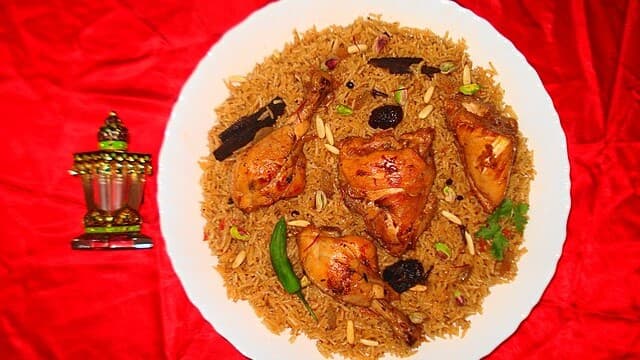
Rice forms the foundation of most Bahraini meals. Machboos — a spiced rice dish typically prepared with lamb, chicken, or fish — is widely regarded as the national dish. It shares similarities with the broader Gulf tradition of kabsa but carries its own regional spice profile, often incorporating dried limes, known locally as loomi, alongside cinnamon, cardamom, and turmeric.
Seafood holds a central place in the local diet, reflecting Bahrain's identity as an island nation. Hammour, a species of grouper native to the Gulf, is among the most commonly consumed fish and appears in grilled, fried, and stewed preparations. Shrimp and crab are also widely eaten, sourced from the surrounding waters of the Arabian Gulf.
Bread, Dates, and Street Food
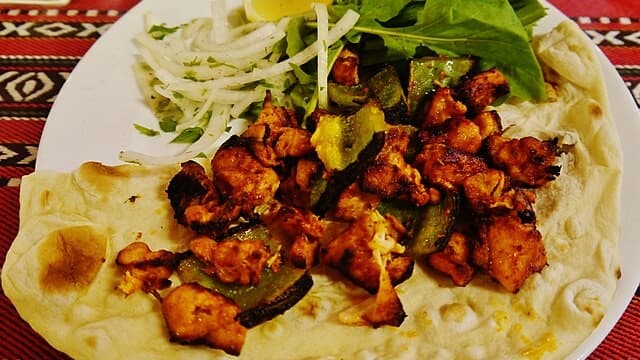
Khubz, a flatbread baked in traditional clay ovens, accompanies most meals and is produced in neighborhood bakeries across the country. Dates, cultivated in the region for thousands of years, remain a cultural staple served alongside Arabic coffee as a gesture of hospitality.
Street food markets and traditional souqs offer lighter fare, including shawarma, falafel, and samboosa — a fried pastry filled with spiced meat or vegetables that reflects the South Asian influence on Gulf cooking.
Beverages and Sweets
Qahwa, a lightly roasted Arabic coffee flavored with cardamom and saffron, is the beverage most associated with Bahraini hospitality. For dessert, luqaimat — small fried dough balls drizzled with date syrup — and halwa, a dense sesame-based sweet, are among the most recognizable traditional confections.
A Changing Food Landscape
Rapid urbanization and a large expatriate population have expanded Bahrain's restaurant sector significantly, bringing South Asian, Southeast Asian, and Western cuisines into widespread availability. Traditional home cooking, however, continues to anchor food culture, particularly during religious occasions such as Ramadan and Eid.
Remaining Questions
As Bahrain modernizes, questions remain about how younger generations will balance international food trends with the preservation of traditional culinary practices, and what role government and cultural institutions may play in safeguarding food heritage.
Sources: Bahrain Tourism and Exhibitions Authority; Oxford Encyclopedia of Food and Drink in America (Gulf regional entries); FAO regional food culture documentation; general culinary geography references on Arabian Gulf cuisine.
This article is based on a primary source and has undergone editorial review prior to publication.