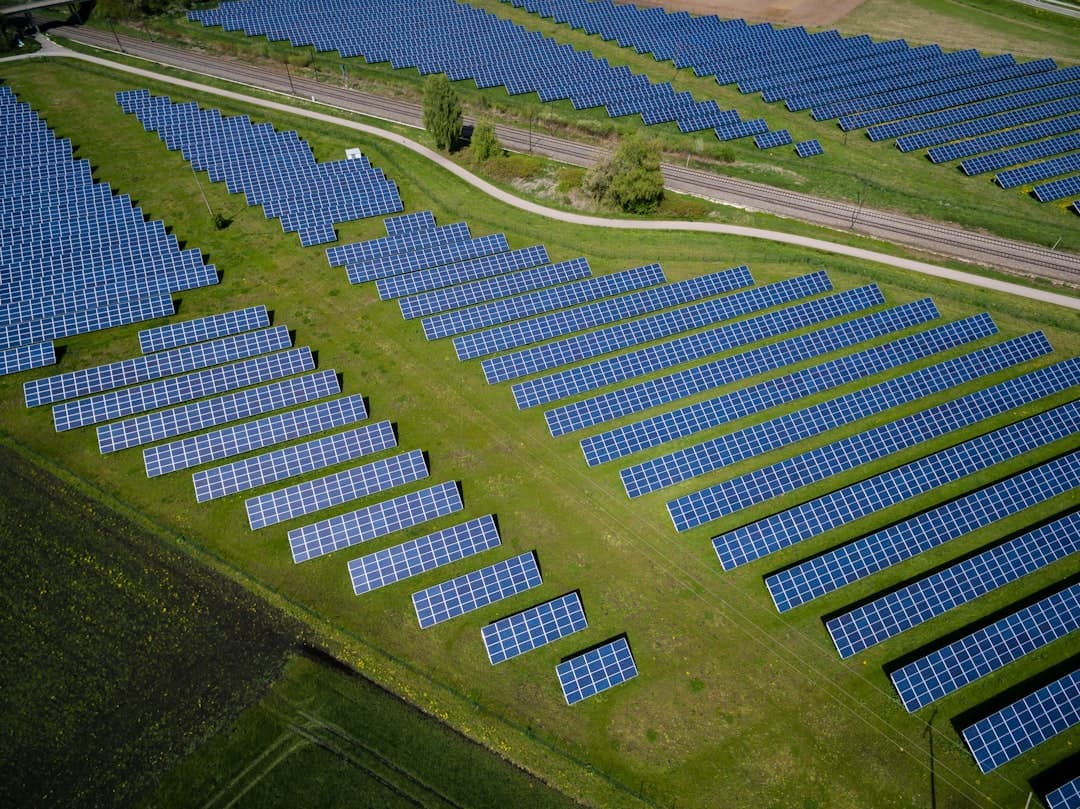
The Gulf Cooperation Council states have, over the past decade, shifted from being predominantly fossil fuel exporters to active participants in global renewable energy research and deployment. This transformation reflects both domestic energy diversification strategies and the region's natural geographic endowments, particularly its high solar irradiance levels and available land mass.
Solar Technology at the Forefront
Concentrated solar power (CSP) and photovoltaic (PV) installations across Saudi Arabia, the United Arab Emirates, and Oman have reached a scale that has drawn attention from the global scientific community. Research facilities affiliated with institutions such as King Abdullah University of Science and Technology (KAUST) and the Masdar Institute have produced published findings on perovskite solar cell efficiency, thermal energy storage, and dust mitigation on solar panels — a technical challenge specific to arid environments where particulate accumulation measurably reduces energy output.
Green Hydrogen Research Gains Momentum
Several Gulf states have established dedicated research programs examining green hydrogen production through electrolysis powered by solar and wind energy. The chemical and thermodynamic processes involved in hydrogen generation, compression, and transport form the core of multiple ongoing research collaborations between regional universities and international partners. Studies have examined the efficiency of proton exchange membrane electrolyzers under high-temperature conditions characteristic of Gulf climates.
Grid Integration and Smart Energy Systems
Research into smart grid infrastructure has expanded alongside renewable deployment. Technical investigations focus on the integration of variable renewable sources into existing transmission networks, storage technologies including utility-scale battery systems, and demand forecasting models calibrated for the region's extreme cooling loads during summer months.
Regional Cooperation and Knowledge Exchange
Scientific conferences and bilateral research agreements have facilitated the exchange of findings between Gulf institutions and research bodies in Europe, Asia, and North America. The International Renewable Energy Agency (IRENA), headquartered in Abu Dhabi, continues to serve as a multilateral platform for data publication and technical standards development.
Open Questions
Researchers continue to examine the long-term material degradation rates of solar infrastructure in high-humidity coastal environments, the scalability of desalination-linked hydrogen production, and the economic and technical parameters governing regional grid interconnection.
Sources: IRENA (irena.org), KAUST Research Publications, Masdar Institute / Khalifa University research output, peer-reviewed journals including Energy Conversion and Management and Solar Energy.
This article is based on a primary source and has undergone editorial review prior to publication. This text is for scientific information purposes only and does not constitute instructions, advice or recommendations.


