UNESCO lists key Palestinian cultural and natural sites, explaining their history, significance, and preservation challenges to guide informed heritage stewardship.
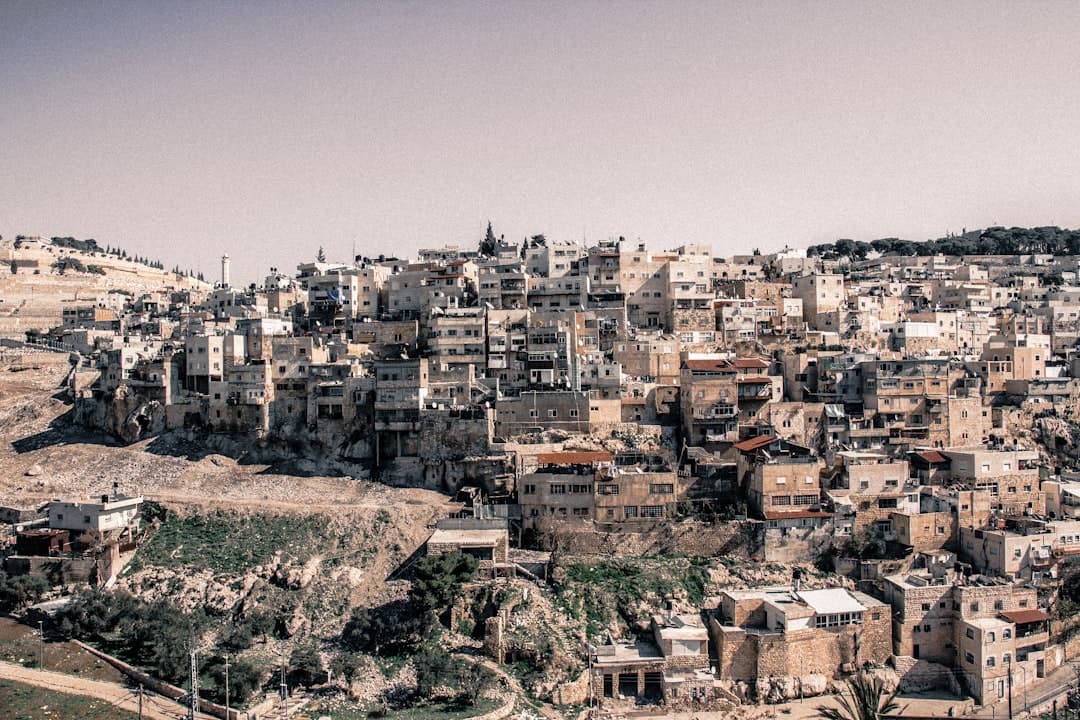
The Old City of Jerusalem and its Walls
Jerusalem's Old City walls encircle centuries of faith, architecture and contested memory, marking a compact urban core whose gates and ramparts reflect Ottoman rebuilding and earlier fortifications.
Historical Significance of the Holy Basin
Holy Basin contains sites sacred to Judaism, Christianity and Islam, shaping pilgrimage patterns, urban form and regional politics across millennia.
Status as a World Heritage Site in Danger
UNESCO listed the Old City and its Walls as World Heritage in Danger due to tensions, development pressures and threats to its historic fabric.
Conservation efforts struggle amid competing jurisdictional claims, restricted access and modern construction that compromise authenticity and integrity, prompting international monitoring and calls for protective measures.
Hebron/Al-Khalil Old Town
Hebron's Old Town preserves narrow alleys, Ottoman-era shops and layered archaeological remains, reflecting continuous urban life and contested heritage within a living Palestinian city.
The Architectural Heritage of the Mamluk Period
Mamluk architecture introduced ornate stonework, carved portals, mashrabiya details and endowment structures like khans and madrasas that define much of the old town's streetscape.
The Ibrahimi Mosque and the Tomb of the Patriarchs
Ibrahimi Mosque occupies the Tomb of the Patriarchs, a multilayered sacred complex central to Jewish and Muslim traditions, pilgrimage and communal memory amid ongoing tensions.
Inside the complex, Crusader masonry, Mamluk renovations and Ottoman additions coexist around preserved mihrabs, a carved cenotaph screen and heritage inscriptions. Community tensions, access arrangements and security constraints complicate conservation and demand context-sensitive engagement with custodians and scholars.
Palestine: Land of Olives and Vines - Cultural Landscape of Southern Jerusalem, Battir
Battir preserves millennia-old terraces, olive groves and spring-fed irrigation that reflect continuous Palestinian farming, community land tenure and seasonal rhythms shaping this culturally rich area.
Ancient Roman Irrigation Systems and Stone Terraces
Roman-era irrigation channels and stone terraces demonstrate advanced water control, channeling springs into distribution networks and cisterns that supported intensive cultivation and settlement across the hills.
Preservation of the Living Agricultural Landscape
Local farmers maintain terraces, shared springs and grazing patterns, while community stewardship and legal protections have reinforced traditional practices and cultural transmission.
Conservation efforts combine municipal planning, UNESCO oversight and grassroots management to protect terraces from urban sprawl, quarrying and irrigation neglect. Farmers and elders train youth in stone repair, olive pruning and spring maintenance; legal actions have secured water rights and buffer zones. Scientific monitoring of soil, hydrology and crop cycles guides adaptive techniques that keep production viable and cultural practices intact.
Ancient Jericho/Tell es-Sultan
Jericho stands as a deeply stratified site where successive settlements reveal continuous human occupation from the Epipaleolithic to historic periods, with monumental walls and a Neolithic tower testifying to intense social organization and long-term habitation.
Archaeological Significance of the World's Oldest Fortified City
Excavations have exposed fortifications, mudbrick architecture, and stratified sequences that pushed back the origins of urban planning and defensive construction in the Near East.
Prehistoric Transitions from Hunter-Gatherer to Sedentary Societies
Evidence at Tell es-Sultan includes permanent dwellings, storage pits, early cultivation traces and communal structures marking the shift from mobile foraging to sedentism.
Stratigraphy at Tell es-Sultan preserves Natufian and Pre-Pottery Neolithic layers showing domestic architecture, stone-built walls and the distinctive Neolithic tower dated to around 8000 BCE. Microbotanical remains, cereal chaff and charred grains indicate early cultivation, while faunal changes point toward managed herds and incremental domestication. Collective burials, plastered skulls and intensifying storage reveal shifts in social organization and ritual practice accompanying sedentary lifeways.
Preservation Challenges and the UNESCO Tentative List
Conservation efforts in Palestine confront erosion, urban pressure, insufficient funding and governance gaps, while the UNESCO tentative list offers a framework for priority-setting, protective measures and international support to secure vulnerable sites and intangible traditions.
Impacts of Geopolitical Conflict on Heritage Sites
Conflict has caused direct damage, restricted access, looting and impeded conservation, leaving many sites undocumented and restoration projects stalled despite intermittent monitoring and emergency documentation initiatives.
Future Candidates for World Heritage Recognition
Prospective candidates on the tentative list include urban cores, archaeological complexes and traditional agricultural systems that require comprehensive management plans, community consent and detailed conservation dossiers to advance toward full World Heritage status.
Comprehensive assessments combine archaeological survey, archival research, oral histories and risk analyses, producing nomination dossiers backed by management plans, community engagement strategies and emergency conservation protocols to meet UNESCO criteria and attract international technical and financial support.
Conclusion
With this in mind, Palestine's UNESCO sites demonstrate layered history, architectural and cultural significance, and ongoing conservation challenges; they require sustained international support, local stewardship, and scholarly attention to protect tangible and intangible heritage for future generations.
Editorial note: This article was prepared using multiple verified sources and editorial research. The content was reviewed, fact-checked and approved by our editorial team prior to publication.