Syria offers Aleppo's rich culinary heritage, from fiery muhammara and stuffed grape leaves to smoky kebabs; this guide identifies top family-run restaurants and authentic street-food spots for serious food explorers.
The Foundations of Aleppine Flavor
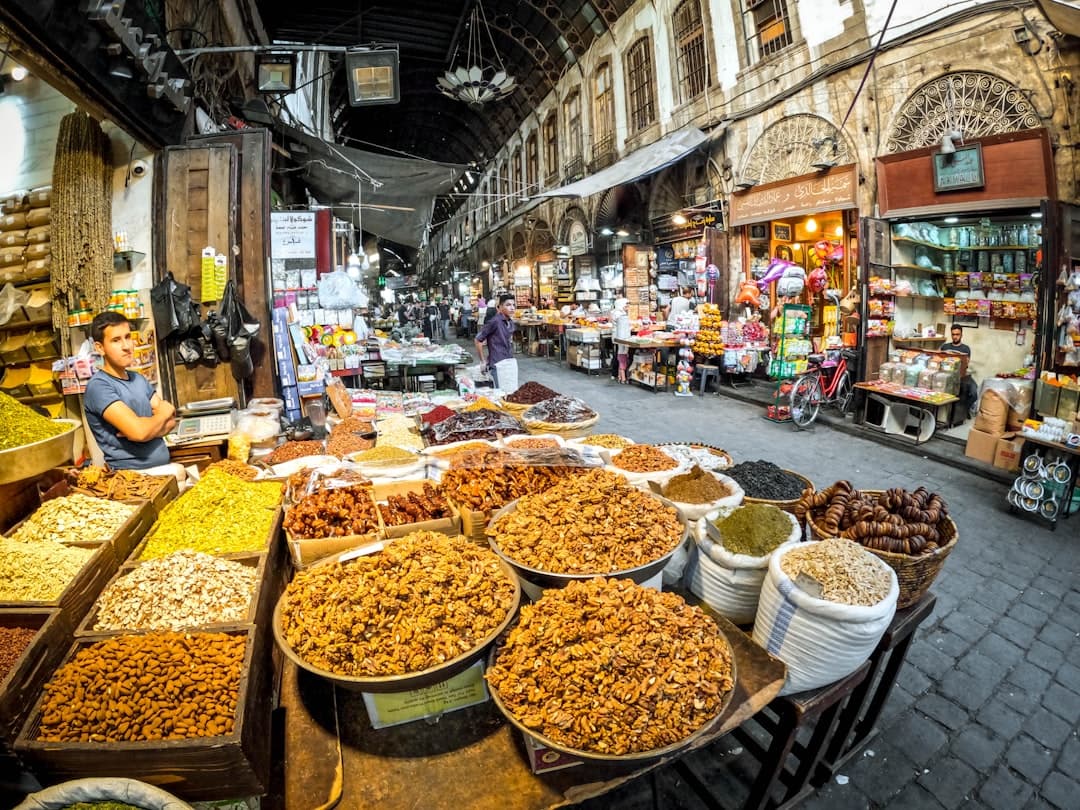
Aleppine kitchens center on balance: olive oil, preserved lemon, toasted nuts, and layered spice blends create savory-sour-sweet cores in stews and mezzes.
The Global Legacy of the Aleppo Pepper
Aleppo pepper traveled ancient trade routes, prized for fruity heat and mild smokiness that seasons everything from kebabs to sweets and modern fusion dishes.
Pomegranate Molasses and Essential Spices
Pomegranate molasses adds concentrated tang and glossy depth, while sumac, cinnamon, and cumin layer acidity, warmth, and earthiness across salads, fattoush, and grilled meats.
Concentrated pomegranate molasses is made by reducing tart juice to a syrup that brightens sauces and glazes; sumac cuts with citrusy tartness, cinnamon supplies gentle warmth, and toasted cumin and coriander introduce nutty, resinous notes that together form the signature, multi-dimensional spice profile of Aleppine cooking.
Masterpieces of the Aleppine Grill
Grilled specialties show Aleppo's mastery: charcoal and local spices produce smoky, layered flavors across kebabs, shish, and vegetable skewers, each bite highlighting regional pepper, sumac, and pistachio accents.
Kebab Karaz: The Signature Cherry Kebab
Kebab Karaz pairs tart, sun-dried cherries with spiced lamb, balancing sweet-sour notes against grilled char; restaurants in Aleppo serve it with bulgur pilaf and pickled vegetables to sharpen the fruit's edge.
Kibbeh Varieties: From Fried to Quince-Infused
Kibbeh spans torpedo-shaped fried versions, tray-baked layers studded with nuts, raw nayyeh, and rare quince-stuffed renditions where tart fruit complements spiced lamb and cracked bulgur.
Chefs craft kibbeh by kneading fine bulgur with marrow-rich lamb to achieve a silky shell, then stuff it with sautéed pine nuts, caramelized onions, and Aleppo pepper. Fried torpedoes deliver a crackling exterior and juicy core; tray kibbeh bakes slowly, allowing layered fillings to meld. Quince-infused versions use cooked quince puree or wedges to introduce a bright, fragrant acidity that cuts through richness, often finished with a squeeze of lemon and fresh mint.
Essential Mezze and Cold Starters
Mezze in Aleppo centers on vibrant cold starters-tangy yogurt salads, pickled vegetables, herb-heavy tabbouleh, and tahini-based dips-served with warm khubz for communal tasting.
Authentic Muhammara and Walnut Spreads
Muhammara blends roasted red peppers, Aleppo pepper, walnuts, and pomegranate molasses into a smoky-sweet spread often finished with olive oil and served with toasted bread.
Regional Variations of Hummus and Mutabbal
Hummus and mutabbal vary across neighborhoods-some cooks prefer lemon-bright hummus, others push tahini richness; mutabbal ranges from lightly charred to deeply smoky eggplant purées.
Across Aleppo, hummus textures range from ultra-smooth to grainy, with tahini-to-chickpea ratios, garlic levels, and lemon acidity reflecting family recipes and market influences.
Premier Fine Dining Destinations
Aleppo's top fine-dining houses fuse Syrian heritage with modern techniques, offering curated tasting menus, attentive service, and elegant settings that celebrate local ingredients and culinary craft.
Historic Courtyard Restaurants in the Old City
Stone-paved courtyards host family-run restaurants serving slow-braised stews, charcoal-grilled kebabs, and age-old mezzes beneath restored arches and glowing lanterns.
Modern Culinary Landmarks and Gourmet Venues
Contemporary kitchens in Aleppo push boundaries with seasonal menus, inventive mezze, and meticulous plating that attract critics and discerning diners alike.
Chefs leading these venues combine locally sourced olive oil, Aleppo pepper, preserved lemons, and mountain herbs with French and Levantine techniques to reinterpret classics such as mujaddara and kibbeh. Tasting menus frequently include thoughtful beverage pairings and chef interactions; booking ahead is common for weekend services and special chef's-table experiences.
Street Food and Souq Specialties
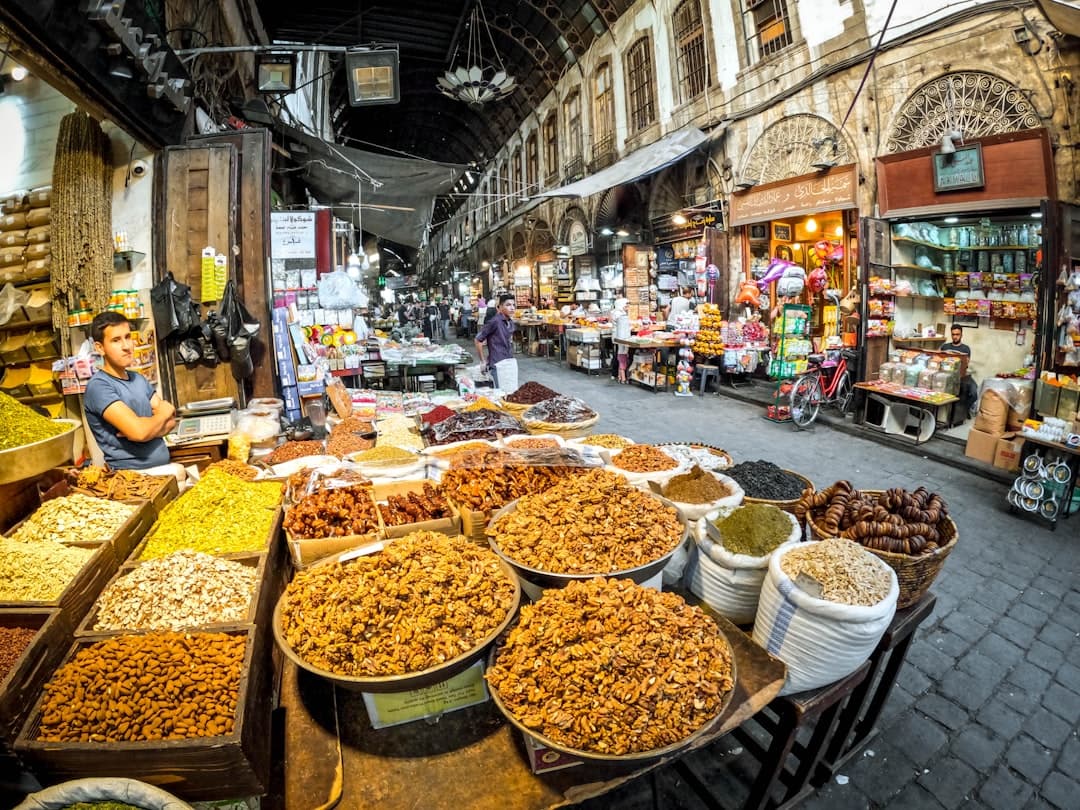
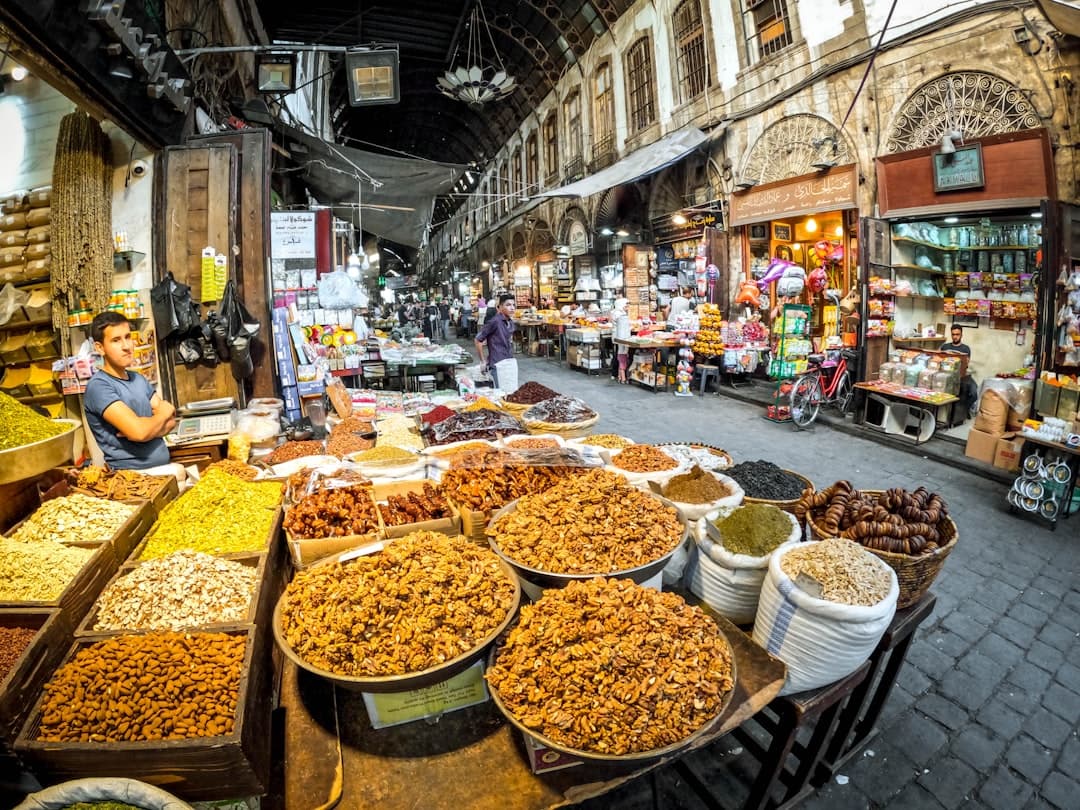
Souqs brim with sizzling grills, spice aromas and quick bites that define Aleppo street food, where vendors balance speed with recipes passed down through generations.
Traditional Falafel and Shawarma Artisans
Stalls along Aleppo's alleys serve crisp falafel and slow-roasted shawarma, seasoned with sumac and garlic, folded into warm pita with tahini, pickles and fresh herbs.
Savory Flatbreads and Market Delicacies
Baked on open griddles, manakish and lahmacun arrive topped with za'atar, cheese or spiced lamb, snagged by shoppers for a fast, flavor-packed bite.
Artisans hand-stretch dough and monitor high-heat ovens to achieve blistered edges; offerings range from tangy thyme and olive oil manakish to minced-lamb lahmacun, with each vendor using distinct spice blends, local olive oils and occasional citrus finishes that reflect neighborhood traditions and seasonal produce.
The Art of Aleppine Pâtisserie
Aleppine pâtisserie refines delicate techniques-syrup balancing, filo layering, precise nut roasting-to yield silky pastries, aromatic ma'amoul and flaky baklava that reflect local taste and artisanal skill.
World-Renowned Pistachio Pastries and Baklava
Pistachio-rich sweets dominate Aleppo's tables, with finely chopped nuts folded into flaky filo, perfumed with rose water and orange blossom, producing the city's signature baklava and delicate pistachio-filled rolls.
Mamounia and Traditional Breakfast Sweets
Mamounia serves honeyed semolina cakes, nut-stuffed ma'amoul and warm syruped pastries alongside strong coffee, a breakfast ritual prized by locals for balanced sweetness and comforting textures.
Visitors discover Mamounia shops where ma'amoul are hand-molded, semolina cakes are soaked to the perfect gloss, and cheese- or cream-filled pastries are baked fresh each morning; on-site roasting of pistachios and careful syrup timing ensure crisp layers and a measured sweetness that defines Aleppo's morning tables.
To wrap up
The culinary heritage of Aleppo shines through its best restaurants, where kebabs, muhammara, and kibbeh showcase centuries-old techniques and bold spice blends. Travelers seeking authentic Syrian flavors will find well-preserved traditions, hospitable service, and memorable street-to-table experiences across the city.
Editorial note: This article was prepared using multiple verified sources and editorial research. The content was reviewed, fact-checked and approved by our editorial team prior to publication.